
Doctor Raman Arora has contributed to handling numerous complex medical cases in several hospitals. He is known for attention to accurate diagnosis and for treating patients empathetically. The speciality interests of Dr Raman Arora are in the treatment of various solid tumors and hematological malignancies. His expertise covers adult and geriatric oncology services, providing both curative and palliative treatments. Additionally, he excels in pain management for cancer patients.
Dr. Arora brings a wealth of knowledge and expertise in treating various types of cancers, including breast, lung and gastrointestinal cancers. His patient-centric approach and commitment to delivering personalized care have earned him a reputation as a leading oncologist.
Dr Raman Arora holds membership in esteemed medical organizations:
- American Society of Clinical Oncology
- European Society of Medical Oncology
- Indian Society of Medical and Pediatric Oncology
- Indian Society of Hematology & Blood Transfusion
- Association of Physicians of India
- Indian Medical Association
Dr Raman Arora ( MBBS, MD-Medicine ) did his Fellowship In medical Oncology from University of Colorado Health Sciences Centre, Colorado. He has also participated in research work and various workshops under the Oncology department and published many papers. Doctor Arora has also received an award in the field of Oncology surgery.
His Expertise:
- Medical Oncology
- Clinical Oncology
- Cancer Treatment and Management
Available Treatments:
- Chemotherapy
- Targeted Therapy
- Immunotherapy
- Palliative Care
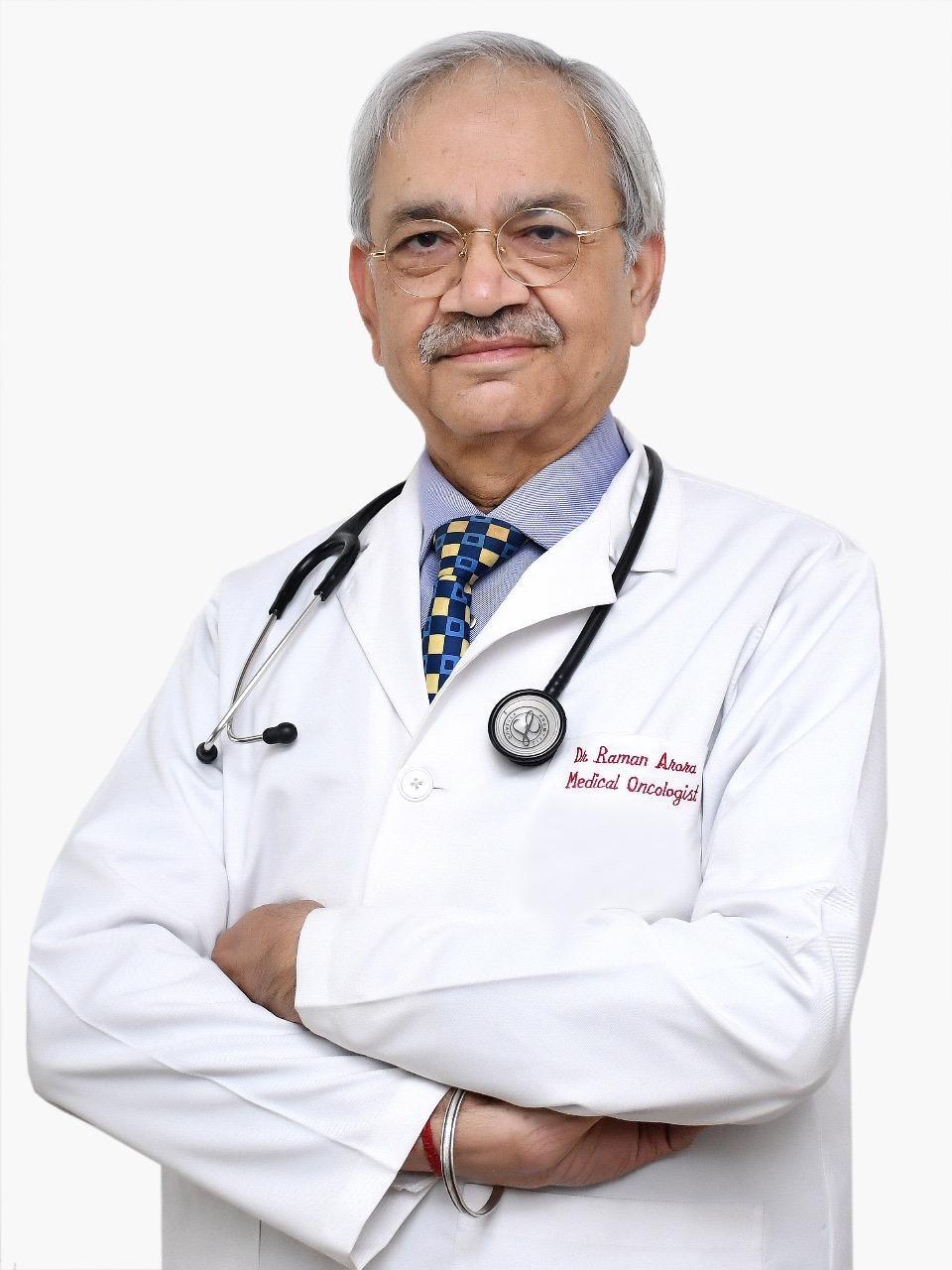
Dr. Raman Arora
Advanced laparoscopic surgery, also known as minimally invasive surgery, is a surgical technique that uses small incisions and specialized tools to access and operate on internal organs. The surgeon uses a laparoscope, which is a thin tube with a camera and a light at the end, to guide the instruments and perform the surgery. This approach offers several advantages over traditional open surgery, such as less pain, reduced scarring, shorter hospital stays, and faster recovery times. Advanced laparoscopic surgery can be used to treat a variety of conditions, including digestive disorders, gynecological issues, and cancer. It requires specialized training and experience to perform, but when done correctly, it can greatly benefit patients and improve their quality of life.
Laparoscopic Hernia Surgery & Complex Abdominal Wall Reconstruction
Laparoscopic hernia surgery is a minimally invasive surgical technique used to repair a hernia, which is a bulge or protrusion of tissue through a weakened or damaged abdominal wall. During laparoscopic hernia surgery, the surgeon makes several small incisions in the abdomen and inserts a laparoscope and other specialized tools to repair the hernia. This approach offers several benefits over traditional open surgery, including less pain, reduced scarring, shorter hospital stays, and faster recovery times.
Complex abdominal wall reconstruction surgery is a more extensive surgical procedure used to repair larger or more complex hernias, as well as other conditions such as abdominal wall defects or trauma. This surgery may involve the use of specialized techniques such as tissue flaps, mesh reinforcement, or muscle reconstruction to repair the abdominal wall and restore its strength and integrity. Complex abdominal wall reconstruction surgery is often performed by a specialized team of surgeons and may require a longer hospital stay and recovery period than laparoscopic hernia surgery. However, it can be highly effective in treating complex abdominal wall conditions and improving patient outcomes.
Trauma and Surgical Critical Care
Trauma and surgical critical care is a specialized area of medicine that focuses on the management of critically ill or injured patients who require surgical intervention. These patients are often in a life-threatening condition and require immediate and intensive care. Trauma and surgical critical care teams are made up of a multidisciplinary group of healthcare professionals, including trauma surgeons, critical care physicians, nurses, respiratory therapists, and others. They work together to provide comprehensive and timely care to patients with severe injuries or illnesses, such as traumatic brain injury, severe burns, or multiple organ failure. The goal of trauma and surgical critical care is to stabilize the patient’s condition, prevent further complications, and optimize their chances of survival and recovery. This field requires specialized training and experience, as well as the ability to work quickly and decisively in high-pressure situations.
Breast and Endocrine Surgery
Breast and endocrine surgery is a specialized field of medicine that focuses on the surgical treatment of breast and endocrine system conditions. Breast surgery may include procedures such as breast biopsy, lumpectomy, mastectomy, and breast reconstruction. These surgeries are used to treat various breast conditions, including breast cancer, benign breast tumors, and other breast disorders. Endocrine surgery, on the other hand, focuses on surgical treatment of the endocrine system, which includes the thyroid, parathyroid, and adrenal glands. This may include procedures such as thyroidectomy, parathyroidectomy, and adrenalectomy. These surgeries are used to treat conditions such as thyroid nodules, thyroid cancer, hyperparathyroidism, and adrenal tumors. Breast and endocrine surgery require specialized training and experience to ensure the best possible outcomes for patients.
Minimally Invasive Surgery for Piles Fistula & Fissure
Minimally invasive surgery is a surgical technique that uses small incisions and specialized tools to access and treat internal conditions such as piles, fistula, and fissure. Piles, also known as hemorrhoids, are swollen veins in the anus or lower rectum. Fistula is an abnormal connection between two organs or body parts, while fissure is a tear or crack in the lining of the anus. These conditions can cause pain, discomfort, and other symptoms that can affect a patient’s quality of life. Minimally invasive surgery for piles, fistula, and fissure involves using specialized tools to remove or treat the affected tissue with minimal damage to surrounding tissue. This approach offers several advantages over traditional open surgery, including less pain, reduced scarring, shorter hospital stays, and faster recovery times. It can greatly benefit patients with these conditions and improve their quality of life. Minimally invasive surgery for piles, fistula, and fissure requires specialized training and experience to perform, but when done correctly, it can be highly effective in treating these conditions.
Pilonidal Sinus & Soft Tissue Surgery
Pilonidal sinus is a condition in which a small hole or tunnel forms in the skin near the top of the buttocks. It is often caused by ingrown hairs and can lead to the formation of abscesses or cysts. Soft tissue surgery is a surgical technique used to treat conditions that affect the soft tissues of the body, such as muscles, tendons, and ligaments. Pilonidal sinus and soft tissue surgery often go hand in hand, as pilonidal sinus can require surgical intervention to remove the affected tissue and repair the area. Soft tissue surgery may involve a variety of techniques, including tissue grafting, tendon repair, and fasciotomy, among others. These surgeries are often performed under local or general anesthesia and may require a period of recovery and rehabilitation. Soft tissue surgery for pilonidal sinus requires specialized training and experience to perform, but can be highly effective in treating the condition and preventing recurrence.